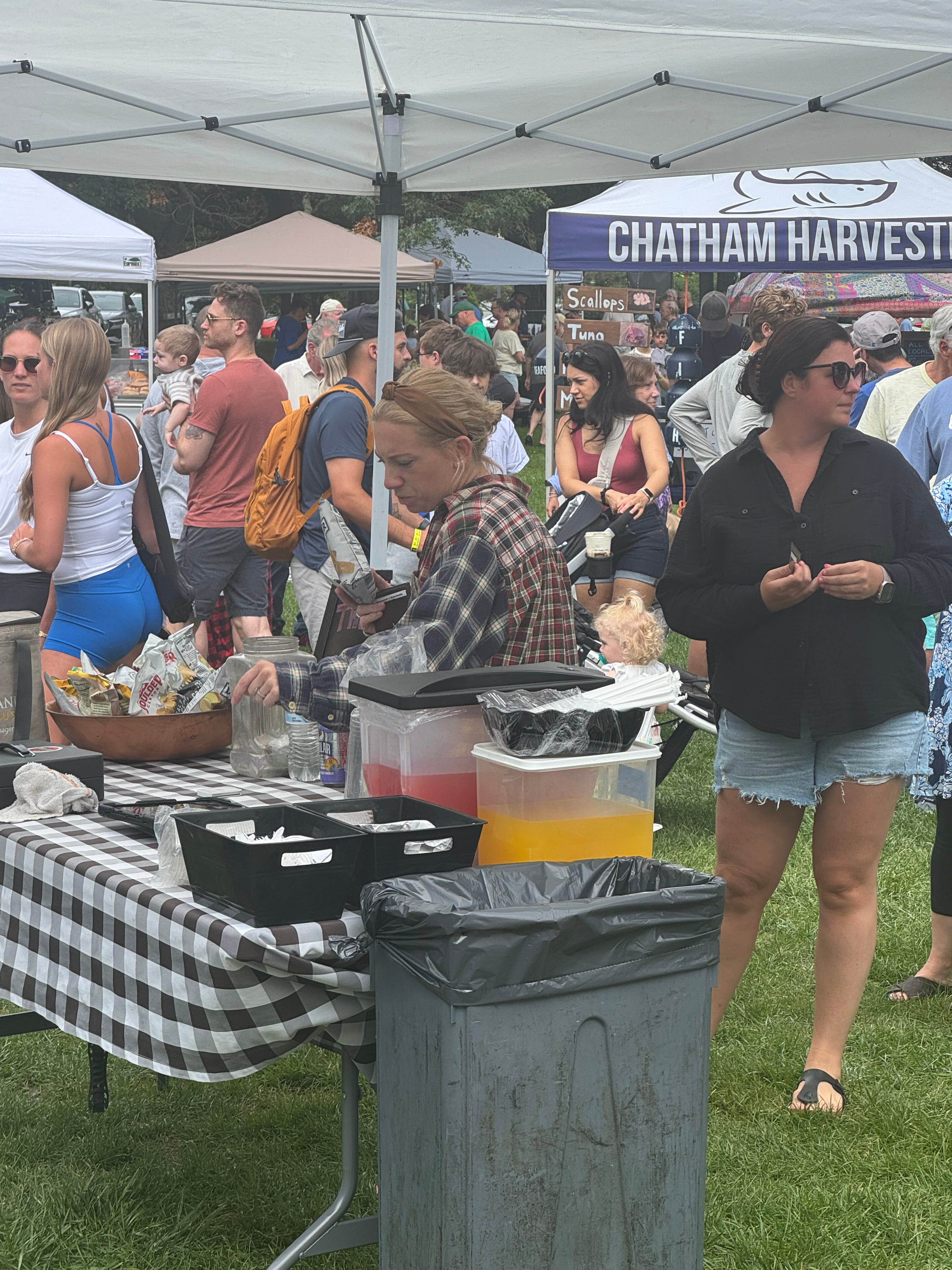
A few tents.
Some veggies.
Maybe a guitar player.
What they don’t see is the amount of invisible work required to make one exist- and survive in a place like Cape Cod.

So here’s the honest version.
A farmers market is a small business incubator, a food access program, a tourism engine, a youth employment program, and a public space rolled into one. But it only works if someone is doing the unglamorous, behind-the-scenes work every single week.
That means:
Weather watching.
Vendor wrangling.
Permit chasing.
Health department calls.
Insurance.
Bathrooms.
Trash.
Music.
Marketing.
Social media.
Power.
Water.
And, yes- money.
At the Mashpee Farmers Market, we don’t just care about whether tomatoes sell. We care about whether families using SNAP can afford to buy them. We care about whether kids can use Power of Produce tokens to pick out their own food. We care about whether a baker or a soap maker can test their product before taking the leap into a brick-and-mortar store.
We’re building an ecosystem, not just a shopping experience.
And here’s the part people don’t always want to hear:
Farmers markets don’t magically pay for themselves.
Grants matter.
Sponsors matter.
Municipal support matters.
Volunteers matter.
Marketing matters.
Storytelling matters.
Every dollar that goes into a market multiplies:
-More money to farmers
-More food for families
-More reasons to come downtown
-More young people seeing how local business works
That’s why I keep doing this work even when it’s exhausting.
Because when a parent tells me their kid used POP tokens to buy their first bunch of carrots.
When a farmer tells me they paid a bill because of a good market day.
When a local maker tells me this was their first real customer
That’s not a side project.
That’s infrastructure.
If you’ve ever wondered why I fight so hard for these spaces; this is why.
And if you’re someone who wants to support local food, local business, or a healthier community, you’re already part of this story.
-Stephanie 🍋